In recent years there has been many conversations about Millennials growing up being digital natives in society, and how that has effected the way Millennials are perceived by society. Many older generations, such as generation X, find Millennials to identify as having “entitlement and narcissism based on personality surveys” (1). In fact, people often refer to them as Generation Me due to being seen as egotistical, self centered people. I believe there are myths and truths to each generation, but society is made up of many people with different backgrounds and cultures, that it is had to be able to categorize a certain age group to fit under one category of personality traits or behaviors. This article will analyze the negative and positive perceptions of digital natives and how myths and truths can shape the way they are identified.
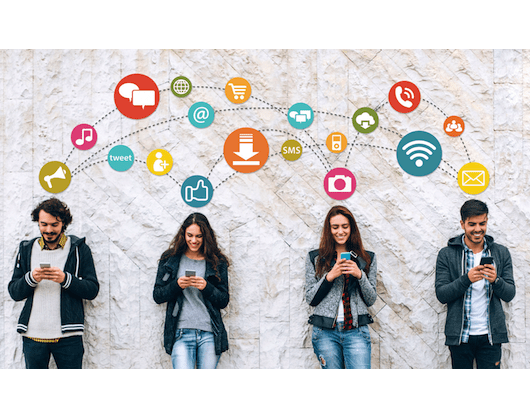
When older generations describe Millennials frequent words that are said are narcissistic, egotistical, self-centered, vain, etc., personally I find this perception to be a myth. Older generations did not grow up with having the internet be accessed right at their finger tips with a touch of a button like I grew up with, so I am able to see where they are coming from in this regard. But they also have to consider the thought that if they were to grow up during this time period they would most likely being doing the same thing. Human beings are social beings, it is in our DNA to want to be able to communicate with one another as communication has been a main principle for our survival. When the new era of social media was exposed to us, it was only natural for us to want to get connected. I believe there is a misconception on how Millennials are perceived because when older generations see them posting pictures of themselves they see it as being self-centered, but it really can be viewed as that person wanting to connect and relate to other people.
The way my generation uses social media has transformed the way we live our lives, as it has shaped the way we learn, work, and communicate. The dawn of the internet has effected the way we learn in a more positive way, as people are able to now access an abundance of information in just a millisecond. Whereas back before the internet acquiring knowledge was much more of a long process has encyclopedias and thesauruses were used more. The web has allowed students to be able to expand their horizons on how they retain knowledge as every student has a different learning style and the internet can create learning to be more interactive.
This is what a typical students desk looks like in my generation, whereas in older generations it may be occupied with paper, books, and pens. The technological innovations have allowed work spaces to be less clustered, while still providing all the information and tools needed.
In terms of working my generation has been able to increase business productivity and success. Before the internet businesses would have to communicate with one another through a piece of paper and pen or in person, this can decrease the productivity in a company as it can take a long time to be able to communicate back and forth with one another. The digital age has allowed business to flourish as response rates with one another are quick and businesses can also sell products online creating themselves to be more accessible to more consumers. Digital immigrants may become frustrated with this switch in business tactics as this is not what they grew up with. But they have to understand that as the years go by more and more technological advancements will take place, and it is only natural to be able to adapt to your own surroundings.
One aspect that I will agree with older generations on is that our form of communication with one another could be better. We have now entered an age where people will go to a restaurant with one another and no one will say a word because they are so consumed with their phones. The scholarly article That’s is so Not True: Adolescents Perspective of Adult Misconceptions of Teen Text Messaging states that “Millennial adolescence prefer to use texting to build face to face networks”, which I think should not be the case (3). I still think that being able to communicate in person vocally with one another is an important aspect of life. Technology has certainly changed they way we socialize and commutate with one another, but it is all about perspective whether or not it has changed for worse or for better.
One major reason why Millennial’s should not have a preconceived negative perception of them is because of the digital divide and how that effects the participation gap. Billions of people in the world have no access to the internet, so the percentage of people who actually are using the internet is a very small percentage. Henry Jenkins even said that we can not “assume that everyone had equal access to the resources, experiences, and knowledge required to meaningfully participate in the new media environment” (2). This proves that there can not be a stereotype that all Millennials act like self-centered, egotistical people who only care about themselves. There are negative problems associated with this because the people without internet access are the ones who tend to be in the most need of help and this can create a participate gap for them because they are not able to spread and share ideas with the public. Examples would include poor people living in Africa or India who have no internet access.
There are many negative perceptions of digital natives because older generations feel as if magazines, books, newspapers have gone down the drain and are not relevant any more. This article provides a perspective of a lady in Generation X and how she thinks Millennials and new technology have worsened society.
But with that being said there is so much that Millennial’s have sone to be able to create a positive perception of themselves. They have been able to help others find a voice, some examples may include the Black Lives Matter and the Me Too movement. This has expanded the participatory culture and allowed people to support a good cause and help others. The differences between generations should not matter as technology has just allowed Millennials to be able to have different opportunities than other generations.
Sources
(1). Geradine Brown PhD, R. N. “The millennials (generation Y): Segregation, integration and racism.” ABNF Journal 28, no. 1 (2017): 5.
(2). Henry Jenkins (2018). “Millenials, New Media and Social Change”.
(3). Tulane, Sarah, J. Mitchell Vaterlaus, and Troy E. Beckert. “That’s SO not true”: adolescent perspectives of adult misconceptions of teen text messaging.” SL Blair, PN Claster, & SM Claster (Eds.) 19 (2015): 369e393.
 Hannah Fitzpatrick's Blog